
← All Guides · Selling
How to sell an inherited collection in Santa Cruz County
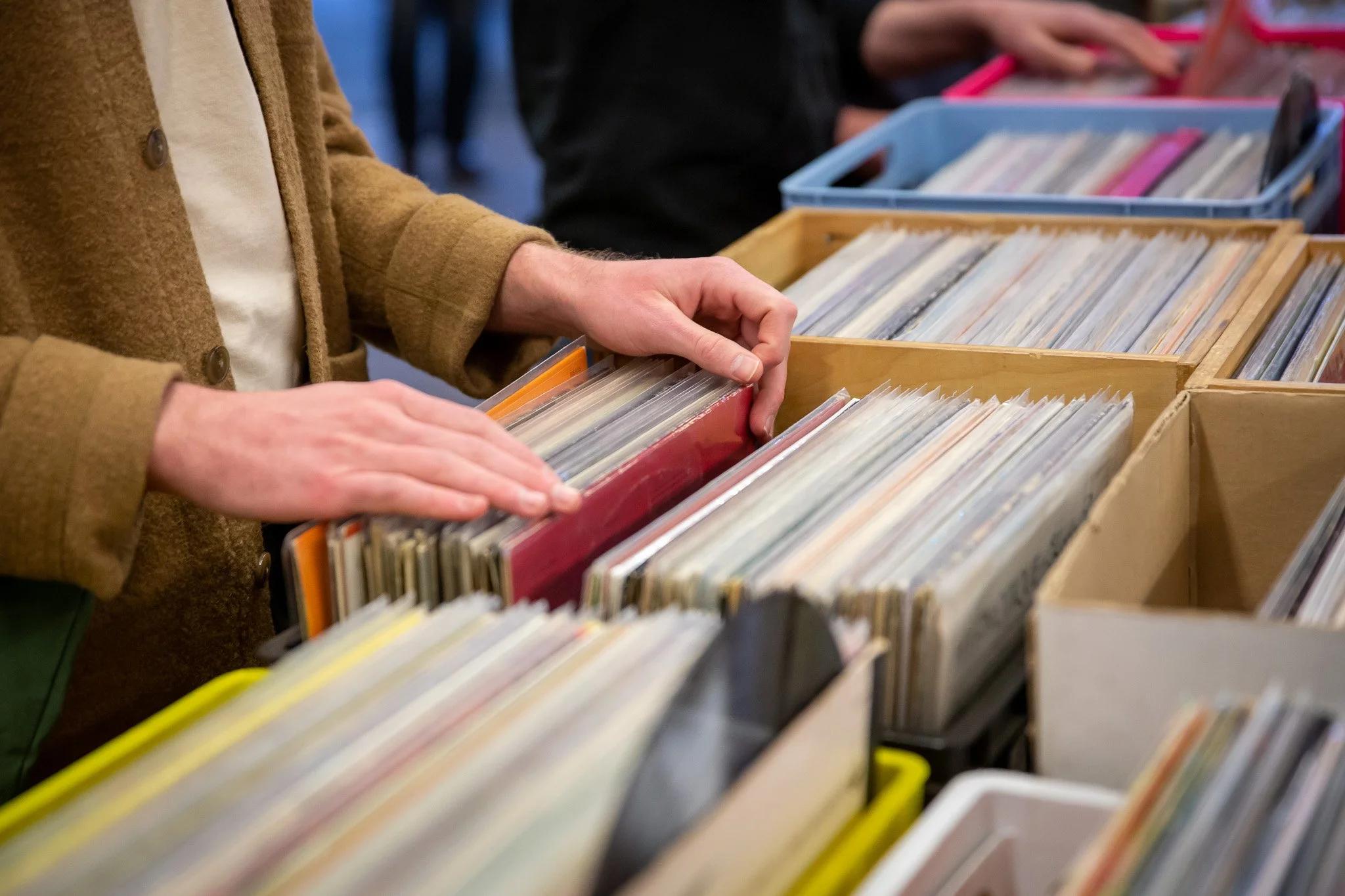
You don't have to sort 400 records, price 100 toys, or run an estate sale yourself. The collections that get top dollar nationally belong on eBay. The rest of the house belongs at the estate sale. This guide shows you how to split the two — and what you actually keep.
The short answer: Don't sell the whole collection to the first buyer, and don't let it go for estate-sale prices. Have the eBay-worthy pieces — vinyl, toys, comics, coins, stamps, anything with a model number and national demand — sold individually on eBay, leave the bulky household goods for the estate sale, and you keep far more than an estate sale would pay, doing none of the work yourself.
Start here
Don't throw anything away yet
The most expensive moment in clearing a house isn't the sale — it's the week before it, when boxes go to the dump, a hauler takes “the lot” for a flat fee, or a well-meaning relative donates the one box that mattered.
Collections are uneven. In a shelf of 200 records, 170 might be worth $3 each and 30 might be worth $40–$150 each. In a toy collection, most pieces are common and a handful — boxed, complete, or with a maker's mark — carry the value. That split never shows by looking at the pile; it only shows up item by item, against what the same item actually sold for.
So the first rule is simple: pause the cleanout until someone who prices from sold data has looked at the collectibles. Furniture can wait a week; the barn can wait a week. Nothing here requires a fast decision — and every fast decision I’ve seen families make (a single cash offer for everything, a hauler's flat rate, a “just take it” giveaway) is the one that leaves the most money behind.
If you're an executor, that pause also protects you: a documented, comp-based sale is defensible to other heirs in a way that “a guy offered $300 for the garage” never is.
01B — The human cost
The part nobody warns you about: sorting while you're grieving
A collection isn't a pile of stuff. It's a person's life, object by object — and every item asks you a question at the worst possible time to be answering questions.
Keep it, sell it, donate it, throw it away? That's one decision — now make it 300 times. For the records he played every Sunday. For the toys that were never just toys. For the jacket that still smells like him. Each choice carries a memory, and guilt either way: for letting it go, or for keeping something you have no room for. Siblings don't always agree, and a disagreement about a $40 item can feel like a disagreement about what Dad meant to everyone.
That's decision fatigue, and it's real: after fifty keep / sell / donate calls in an afternoon, the fifty-first gets a worse answer — not because you don't care, but because you're depleted. Families describe the same arc: the first boxes get careful attention, weekends blur, and then “just take it all” starts to sound reasonable simply because everyone is tired of deciding.
And the timing is the cruelest part: this work lands in the same weeks as the service, the paperwork, the house, the calls from relatives — weeks a family should spend processing a loss together, not pricing a shelf. It's emotional labor and logistics at once, and it can't be rushed: you can't grieve on a schedule and still do the collection justice.
You don't have to carry both jobs at once. The help in this guide isn't about squeezing out an extra dollar — it's about handing the pricing, photographing, and selling to someone for whom an item is an item, so for you it can stay a memory as long as you need it to.
If you're in the middle of this right now
It's normal to feel stuck, overwhelmed, or numb in front of the boxes. That isn't a failure to “get organised” — it's what happens when hundreds of small, meaningful decisions arrive all at once. Pausing the cleanout (see the section above) is allowed, and often the kindest and most financially sound thing to do.
The split
Sort into three piles — that's the whole strategy
You are not choosing between an estate sale and eBay. The right answer for almost every house is both: the estate sale still happens, and the collectibles get pulled out of it first.
Pile A — Sell on eBay
Exact-search collectibles
National buyers search for these by name, model, or pressing. They routinely bring about 42% more on eBay than locally.
- Vinyl, comics, coins & stamps
- Toys, games & action figures
- Vintage clothing & hats with labels
- Anything with a model number
- Small, shippable, $20+ after fees
Pile B — Estate sale
Bulky & household
Local foot traffic over 2–3 days is exactly right for these. Shipping would eat the value anyway.
- Furniture & rugs
- Kitchen, tools & garden
- Everyday clothing & linens
- Books by the shelf, decor
- Anything heavy or fragile to ship
Pile C — Lot, donate, or let go
Below the threshold
Honest pile. Not everything is worth listing, and pretending otherwise wastes everyone's time.
- Common items under ~$20
- Damaged or incomplete pieces
- Bundle these into one lot listing
- Donate the rest — get the receipt
That split is why this works alongside an estate-sale company instead of against one. They get the house — the job they want, and most won't take a job under $5,000–$10,000 gross anyway. The specialist takes the 400 records they can't research. Everybody, including you, ends up with more.
Pricing
How pricing really works: sold prices, not asking prices
Verified eBay Sold Prices — Not Asking Prices
An asking price is a wish. A sold price is a fact. Every number in this guide — and every range given at a walkthrough — comes from completed, sold listings for the same item in the same condition: eBay sold results and Terapeak sell-through data, Marketplace sales, and Discogs for vinyl.
What gets checked, item by item
- Identity first: brand, model, pressing, tag, or maker's mark — read off the item and its photos, not guessed from a similar-looking listing.
- Condition honestly: flaws are photographed and said out loud at intake, because a return costs more than a lower starting price.
- The sold range, not the top sale: priced from the middle of recent sold results, with a private floor below which it doesn't sell.
- Net, not gross: fees, shipping, and pickup are taken out before anyone calls an item “worth it.”
A warning about price-guide sites
Some popular price-guide sites inflate and exaggerate values — a family sees a guide number, expects it, and is disappointed by every real offer afterward. If a site can't show you the actual completed sale behind its number, don't plan around it. Ask whoever prices your collection one question: “Show me where this sold, for that, recently.” If they can't, the number isn't real.
Expectations are the hardest part of this work, and they're set here — at the pricing stage, with the comps in hand — not at the end, when the check is smaller than someone hoped. Grandpa's collection is worth what buyers have actually paid for the same things. Said plainly at the start, that's not bad news; it's the number everything else is built on.
The money
The money, worked out — no surprises later
Here is the rule, word for word, the way it goes in the agreement: commission is a percentage of the gross sale price. eBay's fee comes out of the sale too. The owner is paid what's left. In one sentence, on a $100 item: “It sold for $100, eBay took about $13, the commission was $35, you got about $52.”
Try it with your own rough numbers:
What would you keep?
Estimate only — your walkthrough range comes from sold comps on your actual items. Shipping is paid by the buyer and stays out of the pot.
Defaults:
- Total eBay sales: $1,000 (range 200–5000)
- Number of items sold: 10 (range 1–100)
- Commission: 35% (range 25–50)
Commission varies with the work: a researched, catalogued collection is less work per item than an unsorted barn. The rate is agreed before anything is picked up — never changed after.
| Gross sales (What buyers paid on eBay) | $1,000 |
| eBay fees (~13.25% + $0.30 per order) | −$136 |
| Commission (35% of gross) | −$350 |
| You keep | $514 |
Same items at an estate sale: they typically gross about half (local buyers, 2–3 days), the company takes 35–40% plus setup/cleanup fees — you'd keep roughly $300, and most companies won't take a collection-only job at all.
Interactive calculator in the prototype; figures shown at the default settings above.
The worked example behind the headline number, so you can check the arithmetic: $1,000 of eBay sales across 10 items → $136 in eBay fees (13.25% of $1,000 is $132.50, plus $0.30 × 10 orders is $3, rounded) → $350 commission at 35% → $514 to the owner. The exact fee moves a few dollars by category — eBay's percentage isn't identical for every kind of item — which is why the walkthrough range is built from your actual items, not this example. Listing costs nothing for the first 250 listings a month, then $0.35 each.
Compare that with doing it yourself: you'd keep the $350 commission — and do all the work described in the next section yourself, item after item. Some families want to, and this guide genuinely helps them. Most, in the middle of an estate, don't — and the DIY time guide below does the full time math.
04B — The DIY reality
What selling it yourself on Facebook Marketplace really takes
Marketplace looks free. It isn't — you pay in hours, and the meter restarts with every single item.
Before you can even post: figure out what the item actually is — brand, model, year, pressing, size — then research what it sold for, not what others are asking. On an unfamiliar item, that's 10–20 minutes of searching sold listings alone. Guess the price and you'll either give it away or watch it sit for months.
Then the listing itself: clear a spot with decent light, photograph it from several angles (plus the flaws, plus the label or maker's mark), write a searchable title and description, add measurements and condition, pick a category, post. Done well, that's another 10 minutes or so — per item.
Then the buyers arrive — sort of: “Is this available?” followed by silence. Offers at half your price. Haggling over $5. “Can you hold it until Friday?” People who arrange a time and never show — and people who show up and renegotiate on your doorstep. Driving to a meetup spot, waiting, driving home. For every genuine buyer there are usually several threads that go nowhere — and you're the one answering all of them, evenings and weekends included.
Then you do it all again for the next item. And the next. Marketplace also only reaches local buyers — for a niche collectible, the person who wants that exact pressing or figure may not live within 25 miles of Santa Cruz at all, which is why the same item typically brings more on eBay, where the search is national. the DIY time guide below adds it up: at 25–30 minutes per item to research, photograph, and list, 100 items is 40–50 hours — before you've answered a single message.
None of this means “never sell it yourself.” For five bulky items, Marketplace is exactly right. For a hundred collectibles in the middle of an estate, it's a part-time job you didn't apply for.
The process
How a job actually runs, step by step
- 1 A five-minute call & a photo of the pileBefore anyone drives anywhere. A few phone photos of the shelves or boxes are enough to say whether there's an eBay pile in it — and to be honest if there isn't.
- 2 Free walkthrough & an honest rangeOn site, the collectibles are looked at properly and you get a range built from sold comps — not a promise, a range, with the reasoning shown. No obligation, and no pressure if the answer is “sell it at the estate sale.”
- 3 One-page agreement, before pickupCommission %, fees-from-proceeds, 90 days to sell, what happens to unsold items, and monthly payment — on one page, signed before anything leaves the house. See the four terms below.
- 4 Photos, research & listingEvery item is photographed, its flaws noted, identified, priced from sold data, and listed — eBay for Pile A, local channels only for bulky pieces that shouldn't ship. You do nothing in this step.
- 5 Monthly statement & your checkWhat sold, what it grossed, eBay's fees, the commission, and your payment — item by item, every month, until the collection is done. That statement is also what the next family hears about.
Channels
What sells where — and why it matters
| Item | Best channel | Why |
|---|---|---|
| Vinyl, comics, coins, stamps | eBay (Discogs for vinyl) | Buyers search the exact title/pressing. National demand, local demand is a rounding error. |
| Boxed toys & games | eBay | Completeness and box condition are priced by collectors nationally, given away locally. |
| Vintage clothing with labels | eBay / specialty groups | Label, era, and size are searchable. Needs the right audience, not the nearest one. |
| Furniture, tools, kitchen | Estate sale / local pickup | Shipping kills the margin. Local buyers in the room is the right market. |
| Common items under ~$20 | One lot listing, or estate sale | Below the threshold, lotting gets something for them without burning hours per item. |
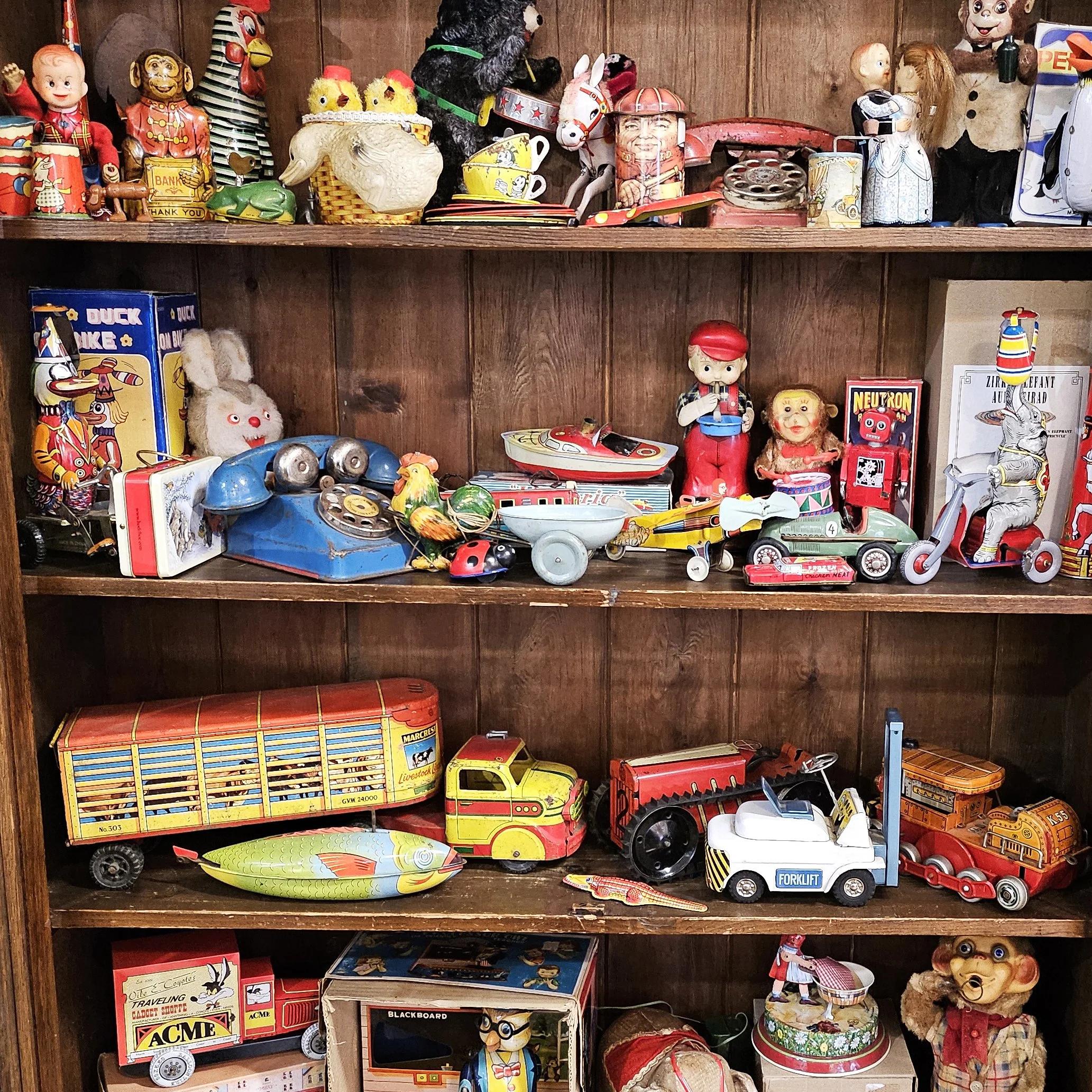
A wall like this is 80% common and 20% valuable — and the valuable 20% is rarely the pieces the family expects. Identification comes first; pricing comes from sold results for that exact piece.
Local
The Santa Cruz local angle
This is a county service, not a website that ships you a label and wishes you luck. Walkthroughs and pickups happen in person, across:
Santa Cruz
Live Oak
Capitola
Soquel
Aptos
Scotts Valley
Felton & the Valley
Watsonville
Corralitos
For smaller drop-offs and meetups, the regular spot is 17th & Brommer at People's Coffee in Live Oak — public, easy parking, and no one comes to your house until you've decided you want that. Salinas and San Jose are case-by-case, when a collection makes the drive worthwhile for both sides.
Working alongside a local estate-sale company or cleanout crew? That's the normal shape of a job here — the collectibles get pulled first, their sale goes ahead on schedule, and the two don't step on each other. Realtors, probate attorneys, and estate-sale companies refer exactly this piece out, because researching 400 records isn't their job. It is this one.
What not to do
Mistakes that cost families money
- × Selling the whole collection to the first cash offer. A single buyer for everything prices in their own resale margin on every item — you're paying the commission anyway, to someone who gives you no statement and no sold-comp pricing.
- × Letting a hauler take “the lot” before anyone looks. Hauling is priced by the truckload. Collectibles are priced by the item. Once it's on the truck, the split can never be recovered.
- × Pricing from asking prices or price-guide sites. Unsold listings and inflated guide numbers set an expectation no real buyer will meet — then good offers get refused while the house sits.
- × Throwing away the “junk” box first. Parts, boxes, manuals, and ephemera are frequently what make the main item complete — and completeness is where the money is.
- × No written agreement because “we trust each other.” Trust is exactly why one page works: commission, fees, unsold items, and timing settled while everyone agrees, not remembered differently in month three.
08B — Not a whole collection?
Just one item — or just a few things? Get a free quick check
You don't need a house full of stuff for this to be worth a message. Plenty of people have exactly one or two things — a vintage jacket, a boxed toy, a camera, a watch, a first pressing, something brand-new still in its box — and one question: does this actually sell?
Free · No obligation · One photo is enough to start
Send a photo. Get the eBay reality check.
Send a clear photo (plus the label, model number, or maker's mark if there is one). I’ll check recent sold listings and tell you plainly: does this item typically sell on eBay, what does it usually sell for, and what does its sell-through rate look like — meaning how often listed copies actually sell versus sit. If it's a strong seller, I’ll say so and what I’d do with it. If it usually sits, I’ll say that too, and where it would do better. No pitch attached either way.
Email thriftyflippaz@gmail.com
Vintage or new, one item or a handful — if it has collectible value, the quick check tells you whether eBay is the right place for it before you spend an evening listing it.
The offer
The free walkthrough — and the agreement that protects you
The walkthrough is free, local, and honest even when the honest answer is “there's not an eBay pile here.” You get the sold-comp range either way. If we do work together, these four terms are on the one page, before pickup:
Commission & fees
Agreed % of gross (35% typical). eBay fees come from the proceeds, stated in the same sentence — never billed to you separately, never a surprise.
90 days to sell
A defined window, with pricing reviewed against sell-through — diagnose first (photos, title, audience) before any price cut.
Unsold items — decided now
Return to you, donate with receipt, or lot them — chosen at signing, so the end of the job is never an argument.
Paid monthly, itemised
A statement per item: sold price, eBay fees, commission, your share. Other people's property is tracked like it matters — because it does.
Start with a photo of the pile
That's genuinely all it takes to start: a few phone photos of the shelves, boxes, or barn corner, and a rough idea of how much there is. You'll get an honest read on whether there's an eBay pile in it — before you drive anywhere, sign anything, or throw anything away.
Email thriftyflippaz@gmail.com
Send a photo of the pile with your first message if you can — it makes the first reply a real answer instead of a guess. No form, no account: you reach me directly.
↑ Thrifty Flippaz home — shop, sell & guides
10 — FAQ
FAQ
What if we're already having an estate sale?
Perfect — that's the intended shape. The collectibles are pulled and documented before the sale, the estate sale goes ahead for the house, and the eBay pieces sell over the following weeks. Tell your estate-sale company early; most are glad to hand this piece off.
How long does it take, and when do we get paid?
The agreement window is 90 days. Statements and payment are monthly, so money starts arriving as items sell rather than in one lump at the end. Strong items in Pile A often sell in the first few weeks; the long tail is exactly why the window exists.
What does it cost if nothing sells?
Nothing out of pocket. Commission and eBay fees only exist when a sale does. Unsold items follow the option you chose in the agreement — returned, donated, lotted, or bought out. Your risk is time, not money.
It's not a “collection” — it's my uncle's clothes and my grandpa's barn. Still worth a call?
Yes. “Just want it gone” jobs are half of this work. Vintage clothing with labels, workwear, tools with model numbers, and barn finds are regularly Pile A material hiding in a cleanout. The photo-first call exists precisely so you don't have to guess which kind of pile you have.
We're outside Santa Cruz — Watsonville, or further?
Watsonville, Corralitos, and the San Lorenzo Valley are in the normal service area. Salinas and San Jose are handled when a collection makes the drive worthwhile — send the photos and you'll get a straight yes or no.
Found one like this?
Text a photo of one item to 707-560-3071 for a free, no-obligation value check.