← All Guides · Selling
How to sell an inherited toy collection
A toy collection is the most uneven pile there is: most of it is common, and a small share — boxed, complete, or the right line from the right years — carries most of the money. Sold as one lot to the first buyer, you get paid for the common 80% and give away the valuable 20%. This guide shows the sort that separates them.
The short answer: Sort the collection into singles and lots before you sell anything. Pieces that clear about $20 after fees — boxed or carded figures, complete sets, redline-era Hot Wheels, G1 Transformers, tin toys with maker's marks — get sold one by one on eBay, where collectors search for the exact piece. The commons get bundled into lots by line and era. Original Star Wars figures sell for $15–$80 loose and $100–$600+ still carded; redline Hot Wheels (1968–77) for $20–$250+ by model and colour. One lot price for everything is the most expensive shortcut in this category.
Full answer, step by step
The sort: how a collection becomes singles and lots
- Group by line and era first. Star Wars with Star Wars, Hot Wheels by decade, LEGO by set. Value lives inside lines — a buyer pays for the specific figure, car, or set, not for “vintage toys” in general.
- Pull the boxed, carded, and complete pieces. Packaging and accessories are the strongest single value signal. A loose figure with its original weapon and card is a different item from the same figure alone.
- Check each candidate against sold listings. Same piece, same completeness, same condition. That check — not age, not nostalgia — decides single vs lot.
- Singles go on eBay; commons get lotted by line. A lot of 30 common Hot Wheels sells to a different buyer than a single redline — both sell, at honest prices, when they're separated.
- Keep the family's pieces out of the sale pile entirely. Anything with personal meaning gets set aside before pricing starts. Deciding under no time pressure is the whole point — see the inherited-collection guide on the emotional cost of sorting.
None of this requires the family to know toys. It requires time and sold data — which is exactly the part that can be handed off.
Real numbers
What the main lines actually sell for — sold-price guidance
Typical sold ranges on eBay. Guidance, not a quote — model, colour, completeness, and condition decide where any specific piece lands, and rare variants go well past these ranges.
| Line | Typical sold range | What moves it |
|---|---|---|
| Hot Wheels Redlines (1968–77) | $20–$250+ | Model, spectraflame colour, wheel and paint condition. Common castings at the bottom, rare colours far above. |
| Original Star Wars figures (1977–85) | $15–$80 loose · $100–$600+ carded | Completeness (original weapon/accessory), card and bubble condition on carded pieces. |
| G.I. Joe & G1 Transformers (1980s) | $25–$300 | Completeness is everything — a complete figure with all parts vs the shell are different markets. |
| LEGO sets (retired) | $30–$300 | Verified completeness, instructions, box, minifigures. Sold by set number, never by the tub. |
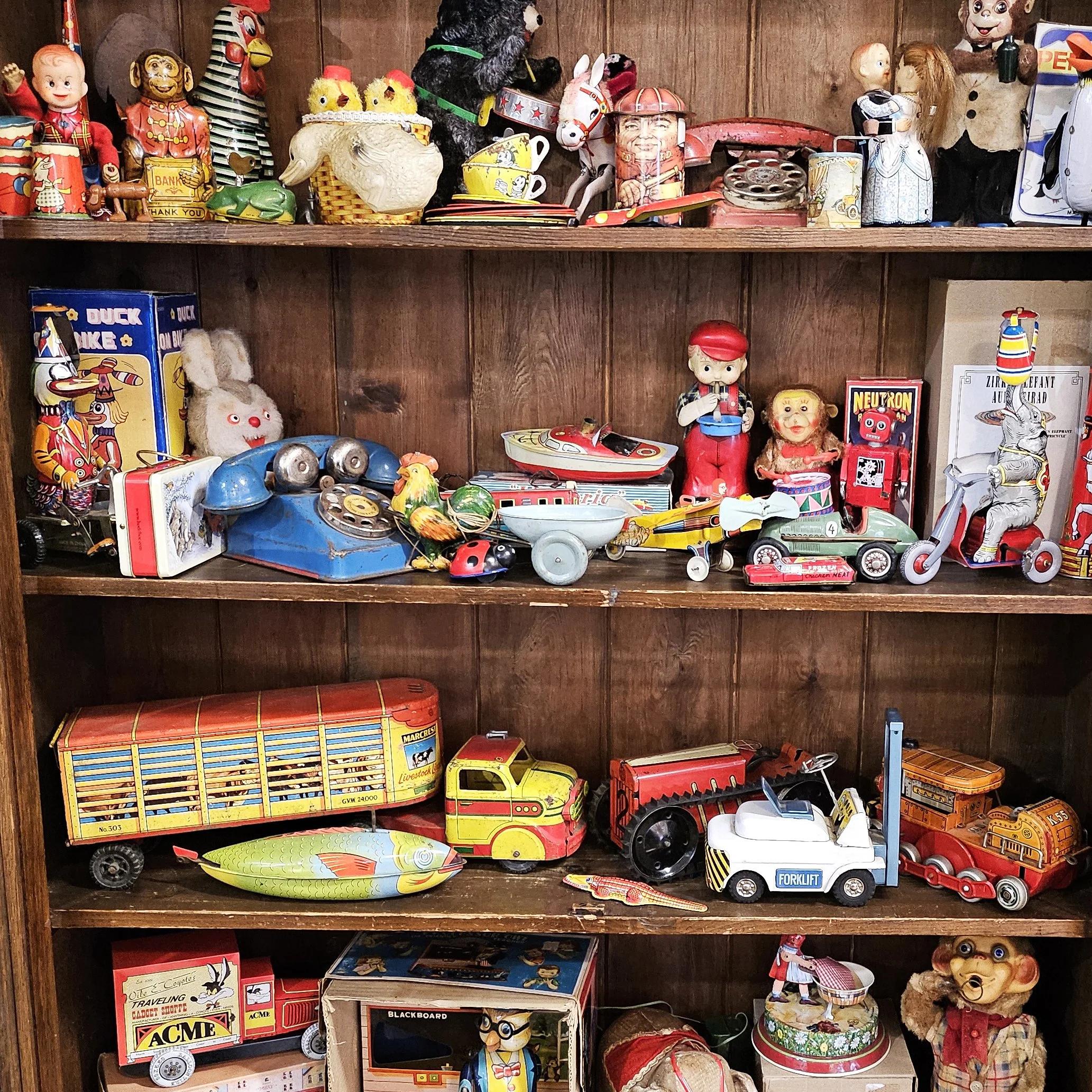
| Tin & wind-up toys | $40–$400 | Maker's mark, working mechanism, original paint. Reproductions exist — marks decide. |
| Common modern toys (1990s–today, loose) | Lot pricing | Sold by line/era lots; a few licensed lines (early Pokémon, some Beanie-era pieces) break out as singles. |
The comparison that matters: a dealer buying the whole collection in one visit prices the valuable fifth at his resale margin and the commons at nearly nothing. Separated and sold from sold comps, the same collection's eBay pile follows the the inherited-collection guide split, at a competitive consignment percentage on consignment, with the commons still sold as lots rather than given away inside someone else's deal.
The local angle
The Santa Cruz angle: a big pile, handled in person
Toy collections are bulky, fragile, and full of small parts — the worst thing to ship to a stranger and the easiest to sort in person. Walkthroughs and pickups happen across Santa Cruz, Live Oak, Capitola, Soquel, Aptos, Scotts Valley, Felton, Watsonville, and Corralitos; smaller drop-offs meet at 17th & Brommer at People's Coffee in Live Oak. Inherited collections usually arrive alongside an estate — the toys get pulled and documented, the estate sale for the house goes ahead, and the two don't step on each other (the where-to-sell guide has the full routing).
And the human part, because it's an inherited pile: sorting a parent's or grandparent's toys is memory work, not admin. Pieces the family wants to keep get set aside first, untouched by pricing. The rest is inventory — and inventory is the part that can be someone else's job.
What not to do
Mistakes that cost toy sellers money
- × Selling the whole collection to the first lot offer. A single buyer prices in their margin on every piece. The valuable fifth subsidises their purchase of the commons — you get one cheque and no statement.
- × Cleaning, repainting, or “fixing” old toys. Original paint and honest wear are what collectors pay for. A repainted tin toy or a re-glued figure can lose most of its value in an afternoon.
- × Throwing away boxes, cards, and loose accessories. The empty box, the backing card, the tiny plastic weapon in the carpet — each one completes a piece, and completeness is where the money is. Bag small parts with their figure.
- × Splitting sets and lines across different buyers. A LEGO set missing its minifigures, or a figure line sold piecemeal to whoever asked first, totals less than the same pieces routed properly. Sort first, sell second.
The offer, plainly
Looking at a wall of toys? Start with one photo
Free · No obligation · A shelf photo is enough
Send a photo of the shelves. Get the honest read.
One wide photo of the collection — plus close-ups of anything boxed or carded — is enough for a first answer: is there an eBay pile in it, roughly which lines carry it, and what the sort would look like. Based on recent sold listings, never asking prices.
Email thriftyflippaz@gmail.com
Hand over the whole sort
Consignment covers identification, the singles-vs-lots sort, sold-comp pricing, photography, listing, selling, and shipping — you keep a competitive consignment percentage of the sale, one-page agreement before pickup, monthly itemised statement. Family keepsakes are set aside first and never listed.
Email thriftyflippaz@gmail.com
↑ Thrifty Flippaz home — shop, sell & guides
FAQ
FAQ
Isn't it simpler to sell the collection as one lot?
Simpler, yes — and priced accordingly. A lot buyer pays for the commons and discounts the valuable pieces for their risk and margin. The singles-and-lots sort takes the same collection and sells each part to the buyer who actually wants it. The difference is routinely the largest single number in an estate.
The toys are played with, not mint. Still worth it?
Often, yes. Played-with vintage sells every day — honest condition, photographed flaws, priced from sold listings of similarly-worn pieces. Mint and boxed pieces top the ranges; played pieces fill the middle. What doesn't sell is pretending played-with is mint.
How do we know which pieces the family should keep?
Keep first, price second. Anything with personal meaning comes out of the pile before any numbers are attached — a piece's market value and its family value are separate questions, and only the family can answer the second one.
What about LEGO by the tub?
Bulk LEGO sells by weight at low rates. Identifiable retired sets — verified complete, with instructions and minifigures — sell by set number at many times that. If the collection has built sets or boxes, those get checked individually before anything goes by the pound.
Is there a case study for toy collections?
Not yet, and it won't be invented. When a consignment toy collection closes, its real item count and sold numbers will be published here with the family's permission — the same rule as every guide on this page.
Found one like this?
Text a photo of one item to 707-560-3071 for a free, no-obligation value check.